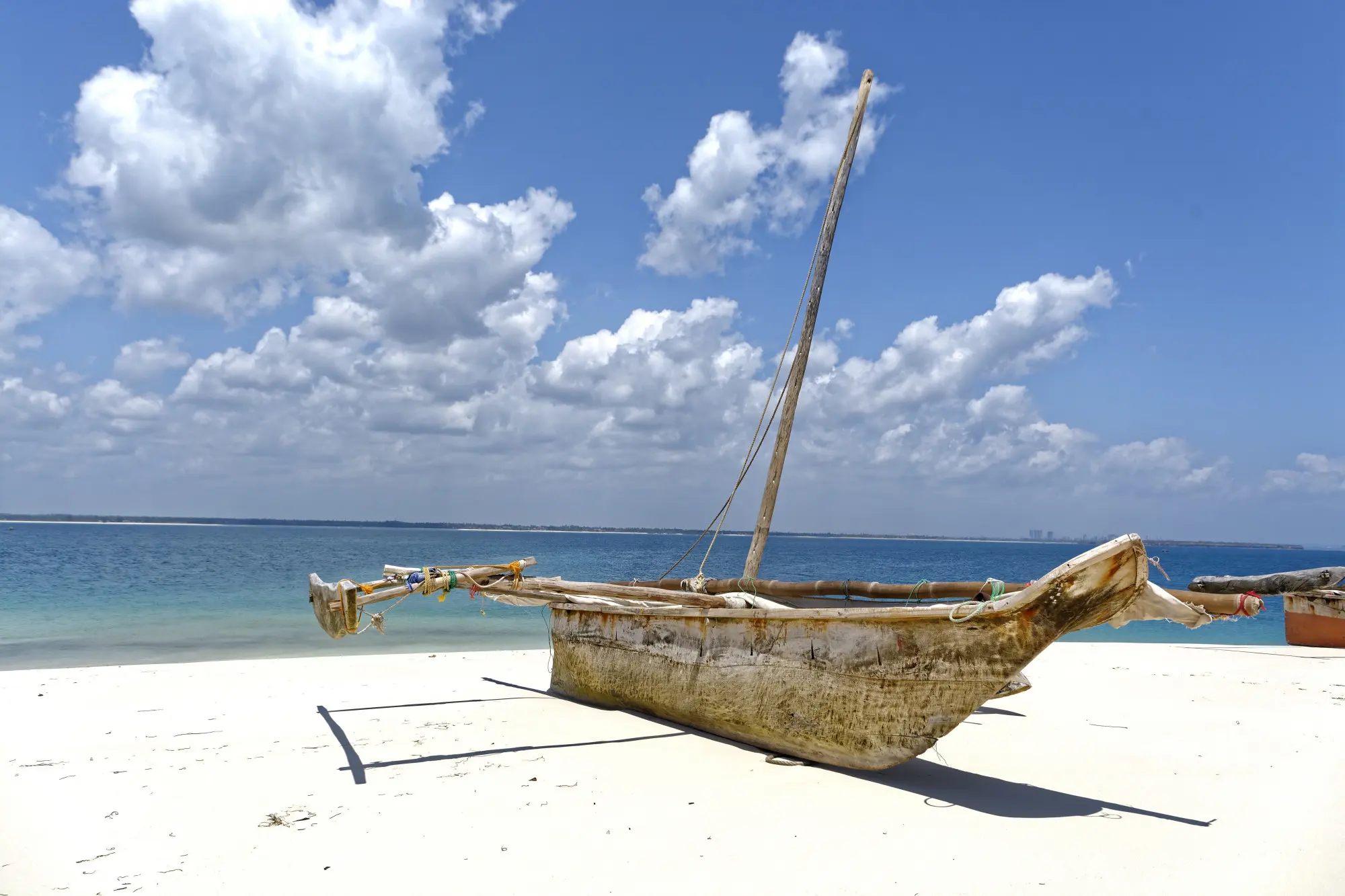
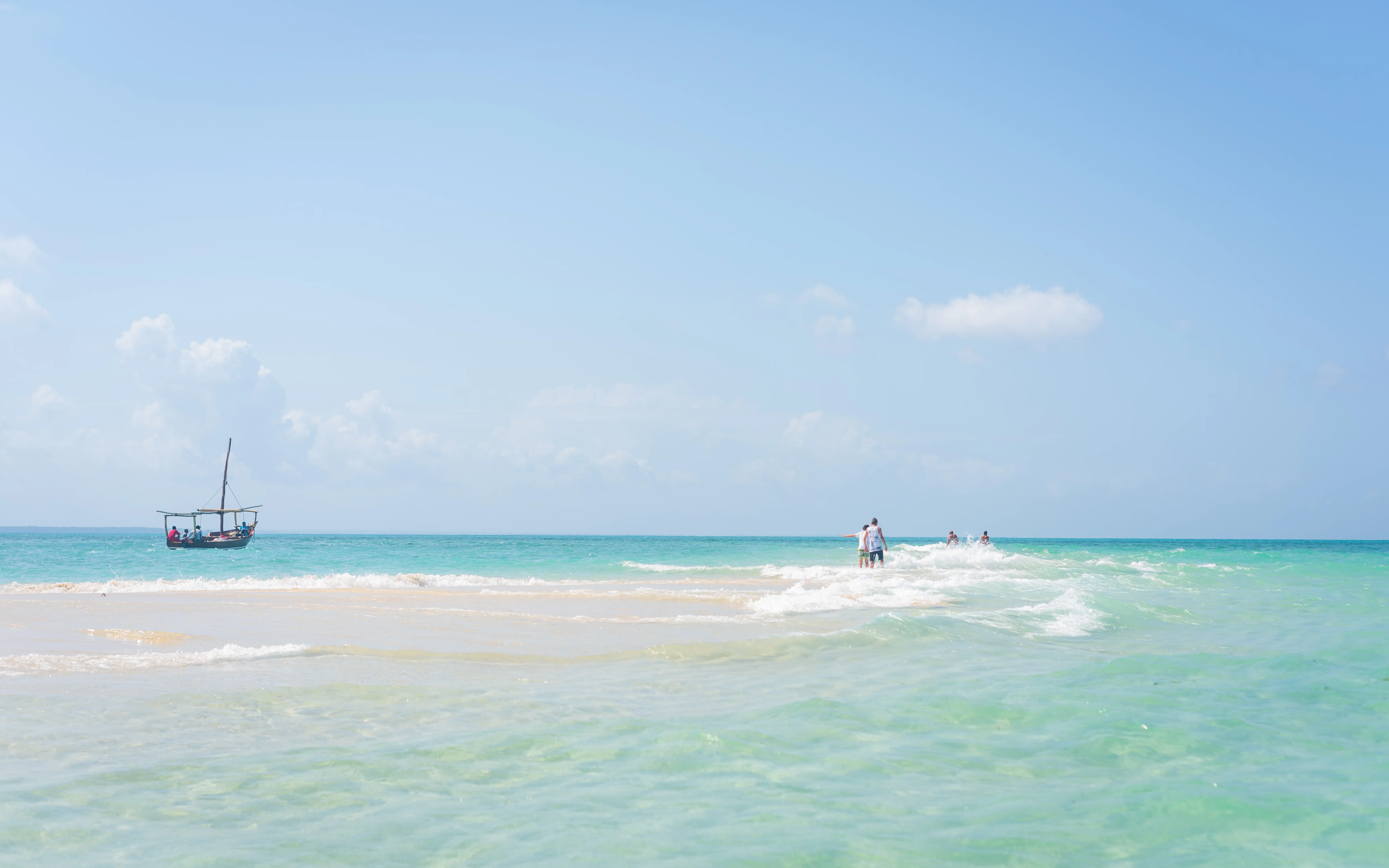
Zanzibar is thirty-five kilometres off the Tanzanian coast and a completely different experience from the mainland. Turquoise water, white sand, the carved wooden doors of Stone Town, and a pace that shifts from the moment you land. This guide covers the island coast by coast.
Zanzibar is not one beach. The north coast offers calm water year-round and suits those who want reliable swimming, watersports, and a lively beach atmosphere. The east coast offers more remote beaches with dramatic tides and a quieter, more local feel. Stone Town is unlike anywhere else in East Africa and deserves at least a full day. Combining all three gives the complete island experience.
Zanzibar sits at the intersection of African, Arab, Indian, and Portuguese influences, shaped by centuries of spice trade and maritime commerce. That layered history is visible in every carved door in Stone Town, every fragrance in the spice markets, and every reef fish in the water below the dhows.
The beaches are exceptional. Turquoise shallow water, white sand, and warm temperatures year-round. But Zanzibar rewards travellers who move beyond the hotel beach. Stone Town's labyrinthine alleyways, the spice farms of the interior, and the reefs around Mnemba Atoll add layers that a purely beach-focused visit misses.
From Moshi we manage Zanzibar as a full destination, not an afterthought. We book hotels, plan activities, and handle the connection from safari to coast so the transition is seamless.
"Most guests arrive on Zanzibar after five or six days of early starts, game drives, and constant movement across the northern circuit. The island does something specific to pace. By the second morning you stop rushing. That decompression is part of the journey."

The coast of Zanzibar behaves very differently from one side of the island to the other. The north coast and east coast are not interchangeable. Understanding which suits your travel style is the first decision in planning a Zanzibar stay. These four are all on Unguja, the main island. If you want something quieter and less developed, Pemba Island to the north is a different island within the same archipelago.
At the northern tip of the island where tidal difference is minimal. The beach is usable at all tide states, the water is clear and calm, and there is a concentration of good hotels and restaurants. Sunsets face northwest and are exceptional. Best for guests who want reliable swimming with options around them.
Explore Nungwi →Two kilometres south of Nungwi along the northwest coast with similar conditions but slightly quieter atmosphere. The full moon parties here are a Zanzibar institution. Good choice for guests who want north coast conditions with a lower density of fellow travellers.
Explore Kendwa →On the southeast coast where the tidal range is extreme. At low tide the exposed reef flat stretches hundreds of metres. At high tide the lagoon fills and the snorkelling is excellent. The village behind the beach is a working fishing and seaweed-farming community, and the hotels are smaller and more intimate. For guests seeking a quieter, less developed east coast experience.
Explore Jambiani →The kite surfing capital of East Africa. Consistent east-facing wind, shallow lagoon, and wide sand flat create near-perfect conditions. Even without kite surfing, the beach has an energetic atmosphere that distinguishes it from quieter stretches further south. The restaurants along Paje have improved significantly in recent years.
Explore Paje →Stone Town is a UNESCO World Heritage Site and one of the best-preserved historic trading towns in East Africa. The architecture is Arab-Swahili: tall houses with narrow alleyways between them, elaborately carved wooden doors, inner courtyards, and rooftop terraces.
The town takes its name from the coral stone used to build the older structures, many of which date from the nineteenth century when Zanzibar was the centre of the East African spice and ivory trade. The most rewarding exploration is walking the back alleys without a fixed plan.
We recommend one or two nights in Stone Town at the start or end of a Zanzibar stay. Staying in one of the heritage boutique hotels inside the old town gives a completely different experience from a beach resort and is difficult to appreciate on a day trip from the north coast.
Stone Town guide →
Zanzibar has two dry seasons and two wet seasons per year. The island is warm year-round, but the difference between the dry and wet seasons matters significantly for beach conditions, diving visibility, and general comfort.
The best and busiest window. Dry, sunny, and reliable. Sea conditions are calm and visibility for snorkelling and diving is excellent. Prices are at their highest. Book hotels three to six months ahead for the best properties in July and August.
Almost as good as the main dry season with slightly lower rates outside the Christmas and New Year spike. Sea conditions are excellent on the north coast. An excellent window for combining with a northern Tanzania safari.
The beach is the main draw but Zanzibar rewards guests who add activities to the stay. These are the experiences worth building into a Zanzibar itinerary.
One of the best snorkelling and diving sites in East Africa. The reef supports turtles, manta rays, dolphins, and exceptional coral in very clear water. A half-day trip from Nungwi is sufficient for snorkelling. A full dive day is required for proper reef exploration.
Zanzibar was historically the world's leading clove producer. The interior still grows cloves, vanilla, cinnamon, cardamom, and nutmeg. A two-hour guided walk through a working farm with tastings and direct-purchase spices. Book with a local guide rather than a group tour operator.
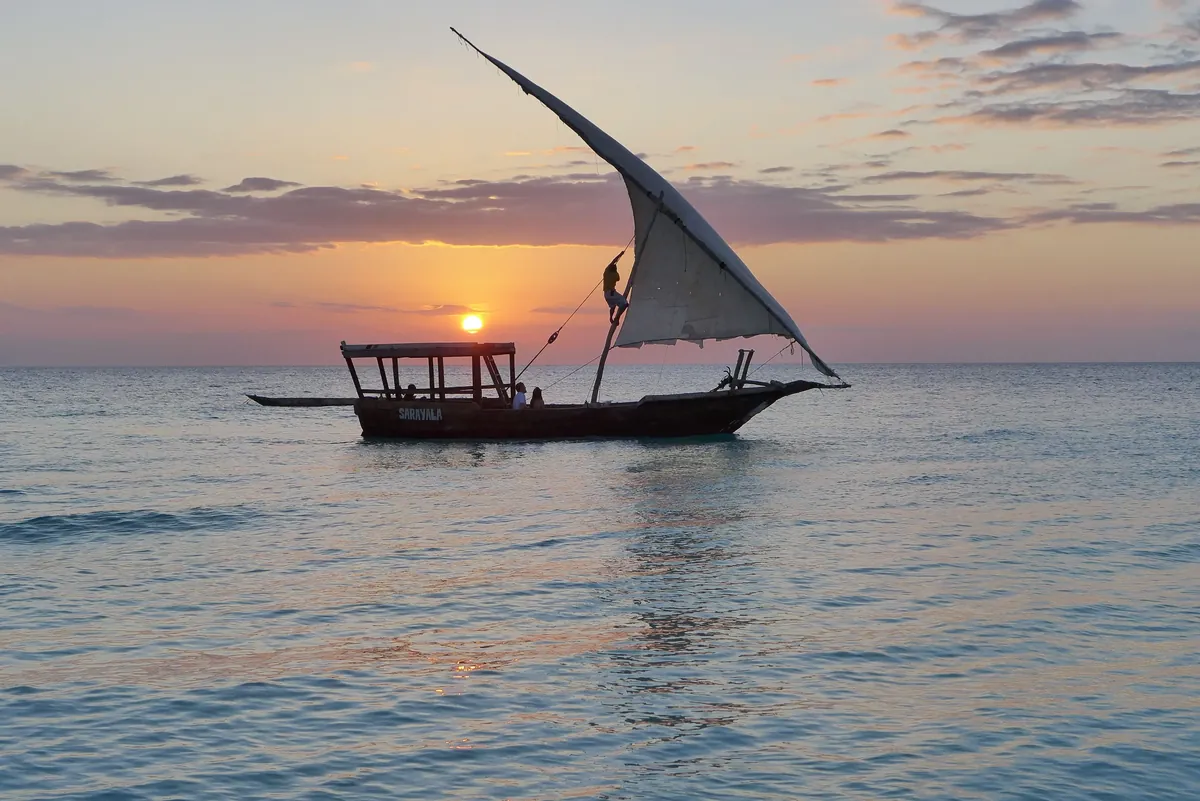
A traditional wooden dhow sailing from Stone Town or the north coast at sunset is one of the most atmospheric experiences on the island. The combination of Indian Ocean light, historic vessels, and the Stone Town skyline produces the photographs that define a Zanzibar visit.
Jozani-Chwaka Bay National Park is the only place on earth where the Zanzibar red colobus monkey lives in the wild. Accessible on a half-day trip from anywhere on the island. The monkeys are highly habituated and close encounters are virtually guaranteed.
A good walking tour covers the carved doors and their symbolism, the Slave Chambers, the Persian Baths, the spice market, and the waterfront. Two hours is the minimum; a half-day tour reaches more of the back streets most visitors never find.
Paje has consistent wind, a shallow lagoon, and several established kite schools. One of the best places in the world to learn. Three to five days of lessons will get a beginner to independent riding. Experienced kite surfers can arrive with their own equipment.
Adding Zanzibar to a Tanzania safari is one of the most natural journeys in East Africa. After five or six days of early departures and game drives across the northern circuit, Zanzibar creates a genuine change of pace. The transition takes approximately 1 to 2 hours by domestic flight from Kilimanjaro or Arusha to Zanzibar, depending on routing.
The most common combination is five to seven nights on safari followed by three to five nights on Zanzibar. We handle the domestic flight booking, hotel, transfer, and the connection home. The logistics are straightforward and the contrast between bush and beach is part of what makes the journey work as a whole.
12 days total. Six nights on the northern circuit, five nights on Zanzibar north coast.
14 days total. Summit the mountain, recover on the Indian Ocean coast.
Zanzibar is part of Tanzania but semi-autonomous and culturally distinct from the mainland. A few practical considerations affect how a visit should be planned.
Zanzibar is a predominantly Muslim island. Away from the hotel beach zones, covered shoulders and knees are appropriate and appreciated. This applies particularly to Stone Town, local markets, and villages. Bikinis are for the beach, not the town. Cultural sensitivity costs nothing and makes interactions more genuine.
Tanzanian shillings are the local currency. USD is widely accepted in hotels and tourist areas. ATMs are available in Stone Town and Nungwi but reliability varies. Carry some cash for small purchases, market transactions, and tips.
Three nights gives one full beach day, one Stone Town day, and a morning activity. Five nights is the most comfortable window for a combined safari and Zanzibar journey. Seven nights suits those covering multiple parts of the island or doing a dive course.
Malaria is present in Zanzibar. Continue malaria prophylaxis throughout your stay. Standard food and water hygiene applies: drink bottled or purified water. The main tourist areas are safe for visitors using standard precautions.
Use reef-safe sunscreen on any ocean activities. The reefs around Zanzibar are under pressure from warming water and conventional sunscreen compounds accelerate coral bleaching. Buy spices, textiles, and crafts directly from local producers rather than through hotel gift shops where the margin does not reach the maker.
Transfers from the airport to hotels are straightforward and we arrange them as part of any Zanzibar booking. Around the island: local dala-dala minibuses (cheap), hired scooters (practical for main roads), or private taxis booked through your hotel (reliable for airport transfers and day trips).
The north coast (Nungwi and Kendwa) for reliable swimming at any tide, calm water, and good infrastructure. The east coast (Jambiani and Paje) for a quieter, more remote experience with dramatic tides and excellent lagoon snorkelling at high tide. The best beach depends on what you want from the stay.
Yes, and it is one of the most popular Tanzania journeys. A domestic flight from Kilimanjaro or Arusha to Zanzibar takes approximately 1 to 2 hours, depending on routing. We handle the connection, the hotel booking, and the transfer so the transition from bush to beach is seamless. Three to five nights on Zanzibar after safari is the standard combination.
If you already have a Tanzania mainland visa, it covers Zanzibar. If arriving directly in Zanzibar from outside Tanzania, a standard Tanzania e-visa covers both the mainland and Zanzibar. Check current requirements for your nationality with the Tanzania Embassy or the online e-visa portal before travel.
Tourist areas are generally safe. Standard travel precautions apply: do not walk alone late at night in unfamiliar areas, use hotel-recommended transport, keep valuables out of sight. The main risks are opportunistic petty theft. Stone Town is safest when explored during daylight hours.
June through October and December through February offer the most reliable dry weather. July to September is peak season with the highest hotel rates. December and January outside the Christmas week is an excellent and slightly less crowded alternative. Avoid April and May if possible as these carry the heaviest rains.
Yes. Stone Town is a UNESCO World Heritage Site and genuinely unlike anywhere else in East Africa. The narrow alleys, carved doors, waterfront, and food culture are worth at least a full day. Staying one or two nights in a heritage hotel inside the old town rather than just doing a day trip is a significantly better experience.
Standalone beach holidays or full safari and Zanzibar combinations. Each is a real, departure-ready itinerary.
Safari + Beach
Climb + Beach
Tell us which part of the coast you want to stay on, whether you are adding safari or coming to Zanzibar standalone, and how many nights you have. We will build a proposal from Moshi with hotel recommendations, transfers, and activities included.