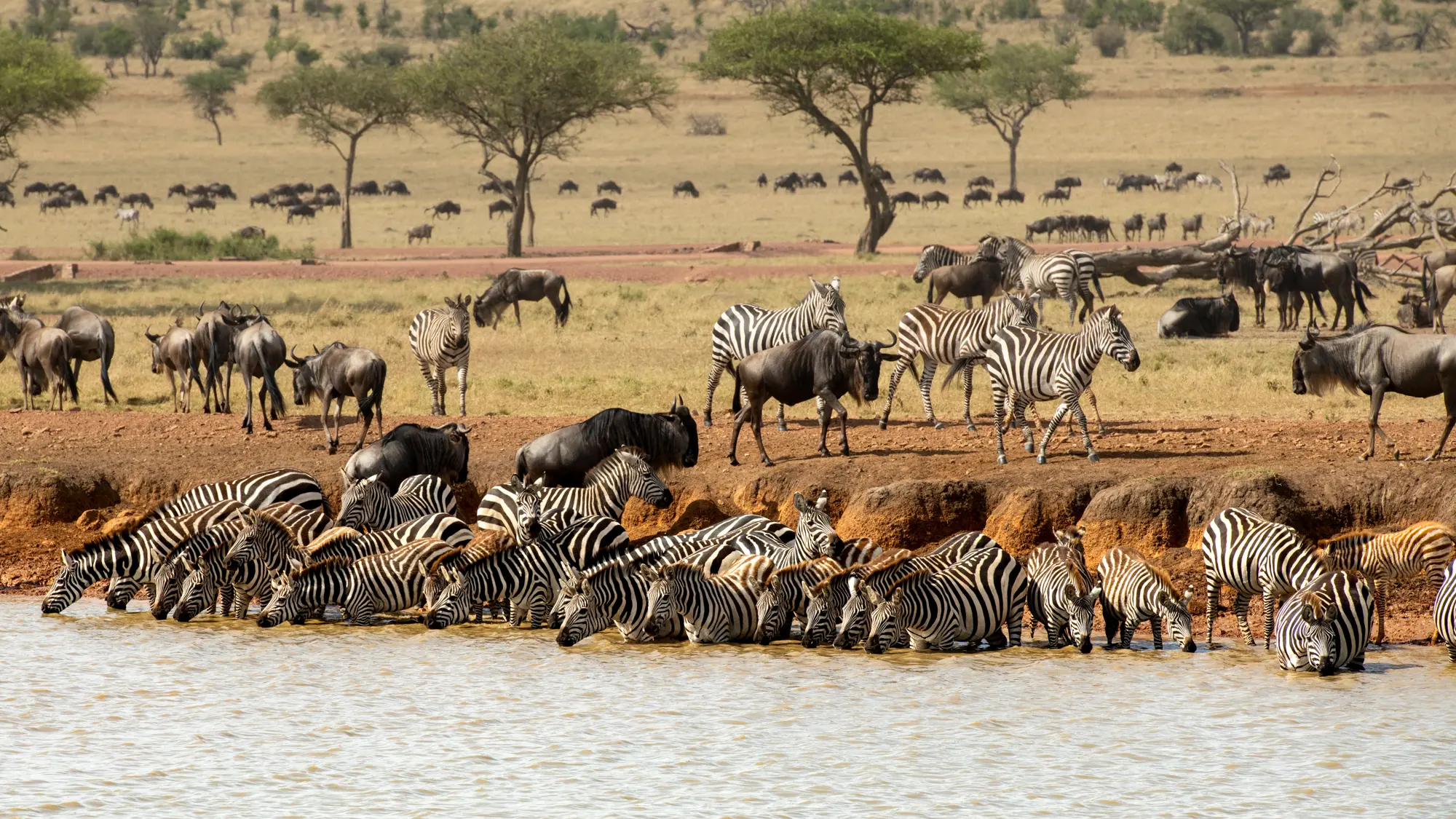
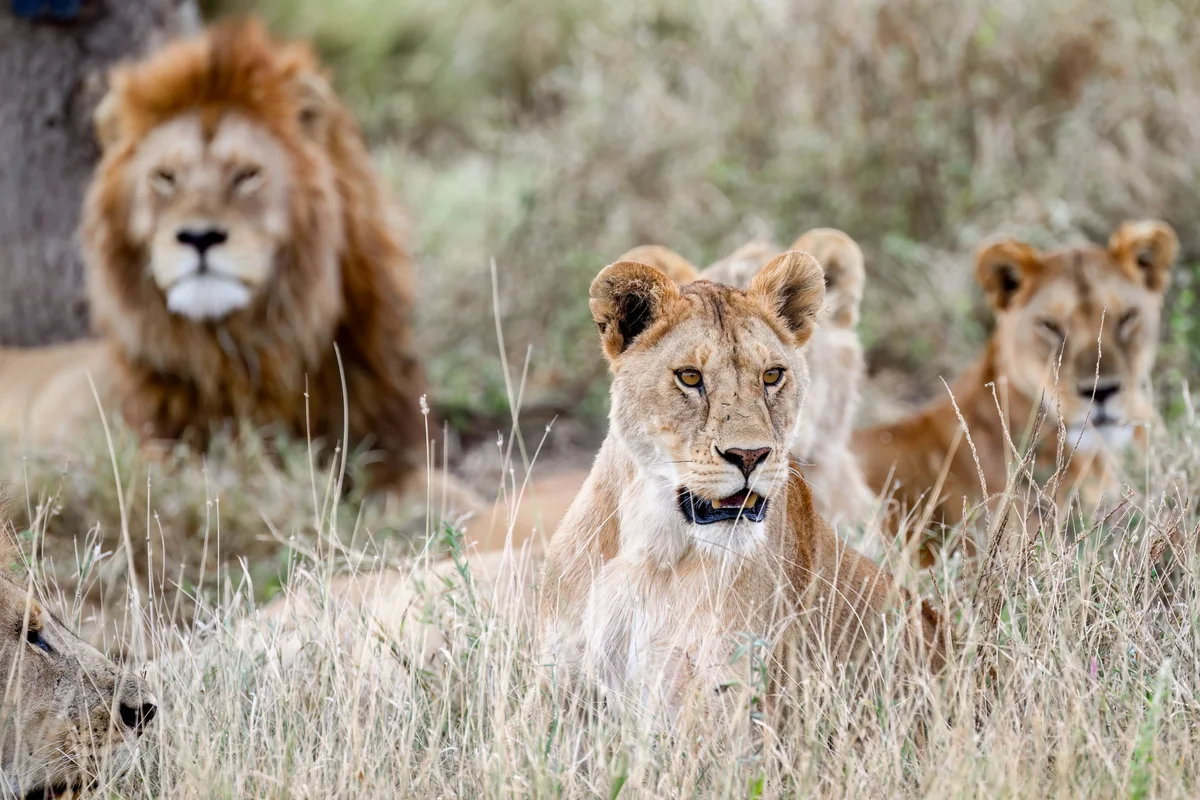
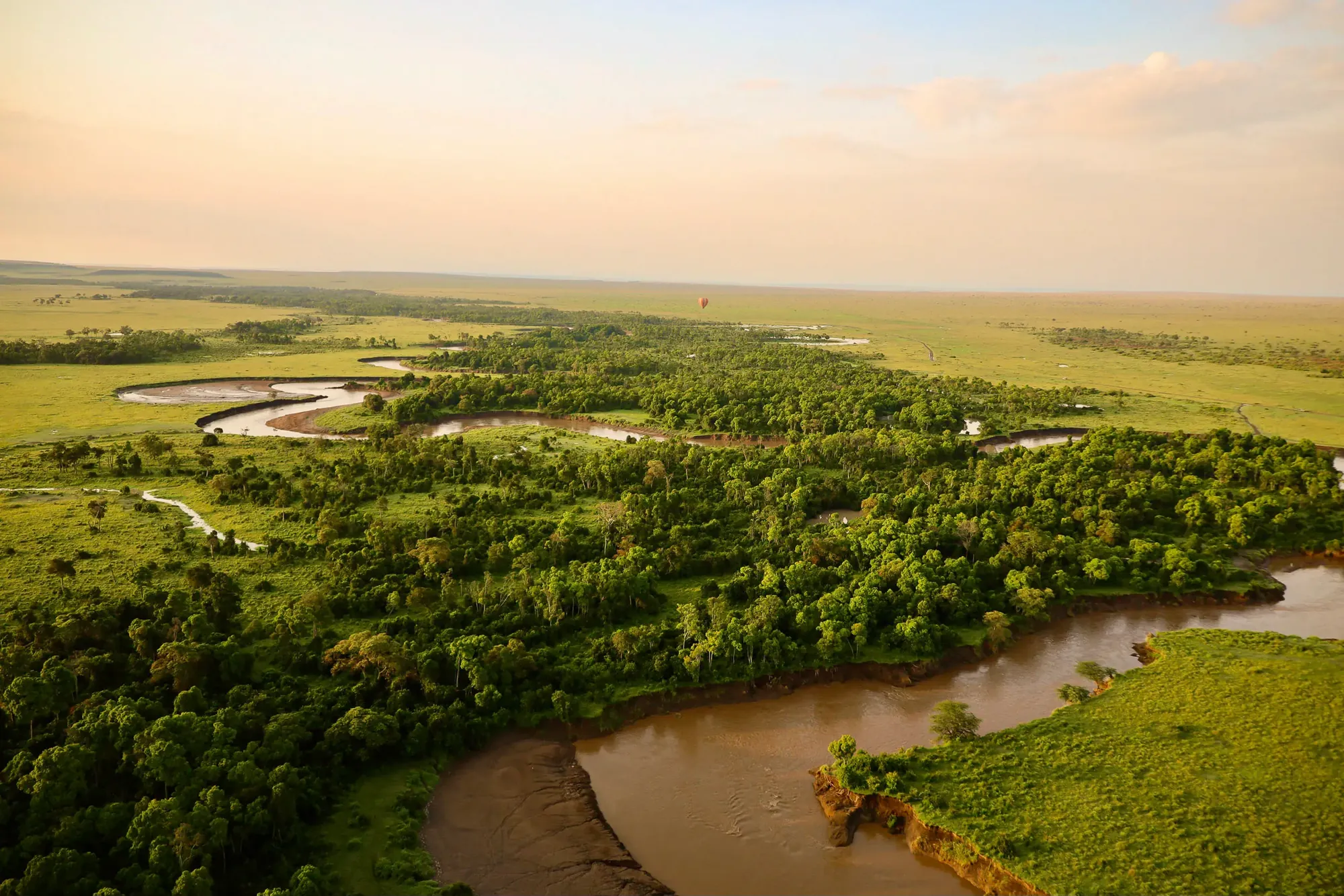
Thirty thousand square kilometres of open savannah in northern Tanzania. The Serengeti is where the Great Migration moves, where predator densities are among the highest in Africa, and where a full day on the plains can pass with nothing on the schedule but watching.
Most travelers arrive expecting the migration and leave surprised by everything else. The Serengeti is not one landscape or one experience. It is a vast ecosystem that behaves differently in different seasons, in different regions, and at different times of day. Understanding how it moves changes everything about how you plan a safari here.
"The scale absorbs everything. It is not dramatic in the way photographs suggest. It is quieter, larger, and more constant."
The Serengeti changes by month, by region, and by hour. Early mornings tend to feel colder and quieter. Predators are active before the heat arrives. By mid-morning the vehicles from other camps begin appearing at main sighting areas, which is why the first two hours of a game drive matter most. That movement of light, temperature, and wildlife through a single day is part of what makes the Serengeti feel alive in a way that is difficult to replicate anywhere else.
The ecosystem stretches across enormous distances with very different environments between regions. Choosing the right region for your travel dates often matters more than choosing the most expensive camp.
The Serengeti does not have one best season. It has different seasons that suit different travelers. The migration moves by rainfall and grass, not by calendar date. For travelers planning around the Great Migration, the question is which phase of movement you want to experience.
For a detailed breakdown of timing, herds by location, and what to expect at each phase, read the Great Migration Safari Guide.
A day in the Serengeti is built around light. The day begins before sunrise with cold air and a horizontal quality of light that changes everything. The rhythm below repeats across every day, and does not become repetitive.
Camp location often matters more than lodge brand. A premium camp in the wrong part of the park for your travel dates means long drives to reach active wildlife areas. Plan by region first, then by lodge style.
Our planning starts with your travel dates and what kind of Serengeti experience you are looking for. We recommend camp location first, then lodge brand, then tier. Talk to us about your Serengeti safari before you book anywhere else.
The Serengeti rewards time. A single night technically qualifies, but the experience builds significantly across days. Here is what different durations realistically offer.
These are the planning errors we see most frequently. Avoiding them does not require experience; it requires asking the right questions before booking.
Tell us your travel dates, how many nights you want in the Serengeti, and what kind of experience you are looking for. We will build a detailed private safari proposal from Moshi.