Every safari we build is private. Beyond that, the style depends on who is travelling, when, and what matters most. This guide explains each approach so you can identify the one that fits your journey before you reach out to us.
Every safari we operate is private. One vehicle, your group, your guide. No shared departures, no compromises on timing, and no strangers deciding when the vehicle moves on from a sighting. The style descriptions below describe what changes beyond that baseline. The private vehicle is not a style; it is the minimum standard.
Each of these is a real approach with distinct priorities, itinerary structures, and accommodation considerations. They are not marketing categories. They reflect genuinely different travel goals that require different planning decisions.
The standard private safari with one vehicle, one guide, and complete flexibility. The northern circuit over five to nine nights. No shared vehicles, no group schedules. Every level of accommodation from comfortable to luxury.
Read more ↓The finest camps and lodges in each park, private fly-in transfers where available, elevated food and service, and the best-positioned properties at the right time of year. The same private vehicle standard but in a higher register of comfort.
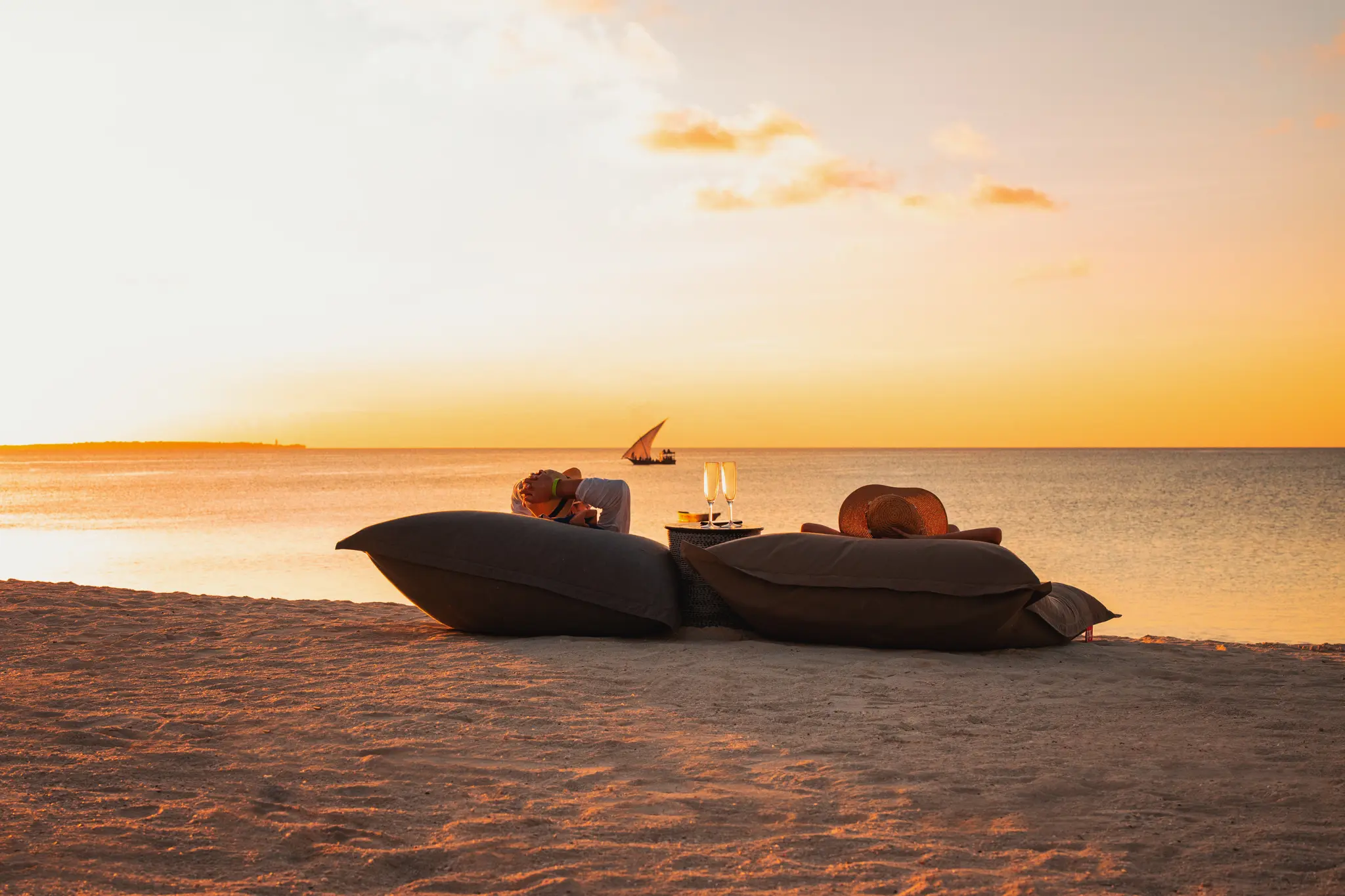
Read more ↓Privacy, intimacy, and setting. Premium camps with exceptional positions, a Zanzibar extension for the beach component, and added touches that mark the journey as a celebration. Built around what makes a honeymoon feel distinct from any other safari.
Read more ↓Itineraries that account for the ages of children in the group, with park choices and pacing suited to mixed-age family travel. Tarangire and Ngorongoro as anchors, camps with family-friendly facilities, and guides experienced with younger guests.
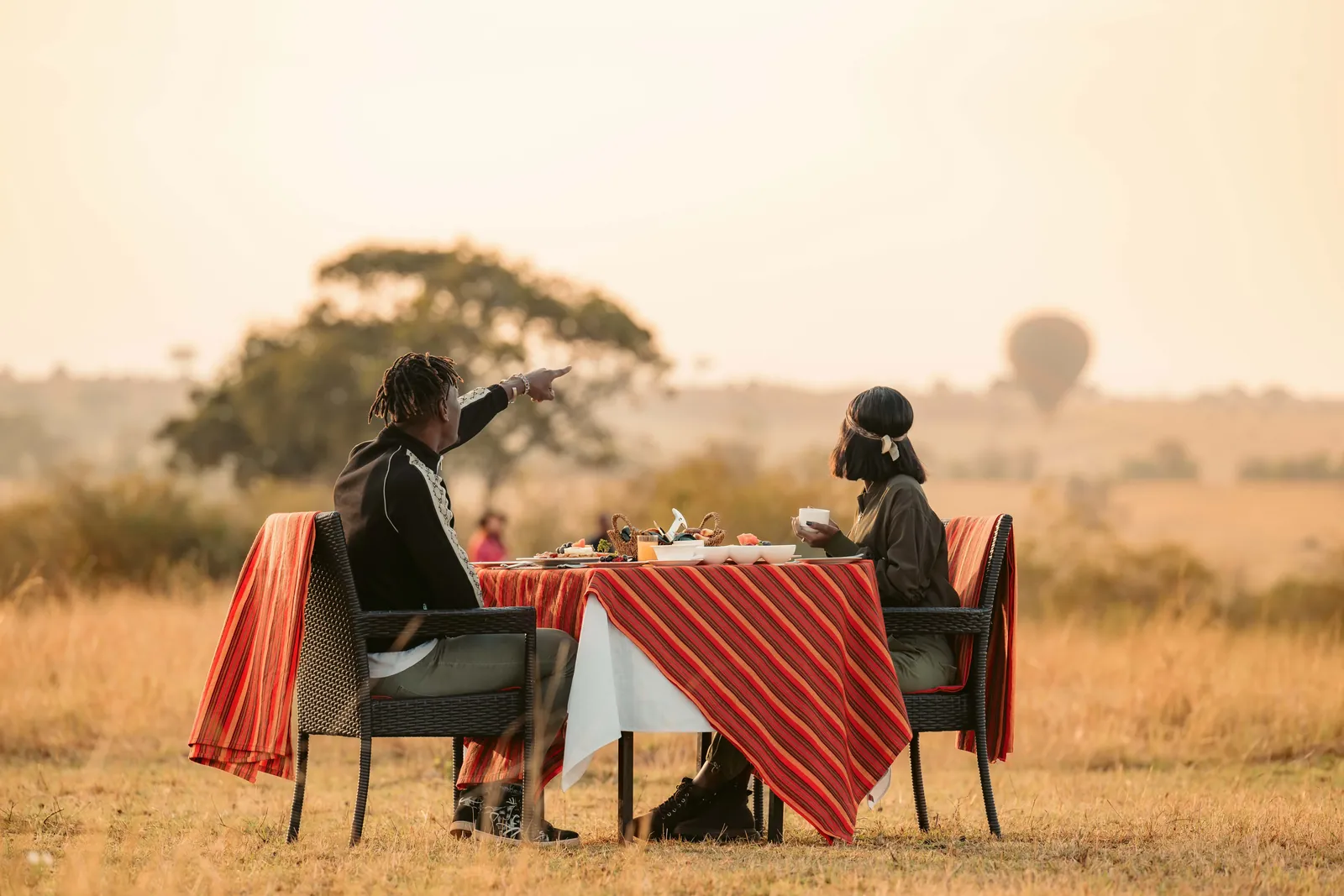
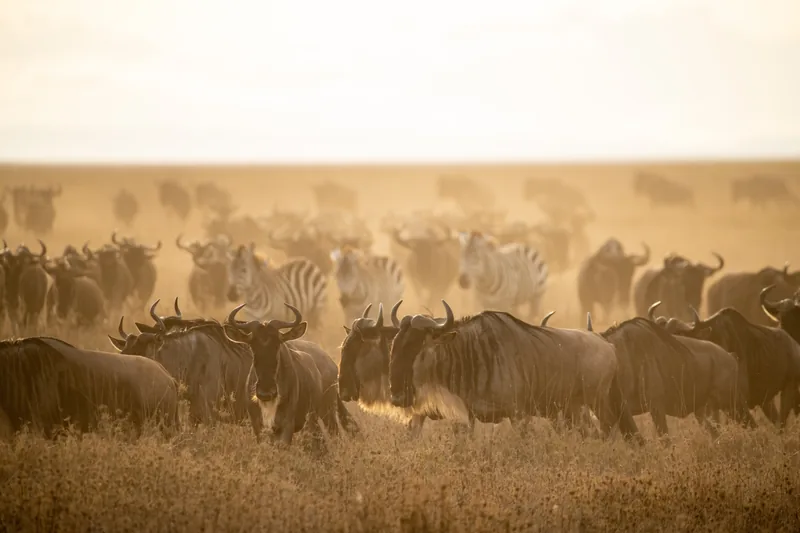
Read more ↓Timed and positioned for the wildebeest movement, either calving season in the south (January to March) or river crossings in the north (July to October). Camp selection is critical. The vehicle positioning within the park is equally so.
Read more ↓Oriented around image-making. Prioritises early morning and late afternoon light, longer stops at significant sightings, guide knowledge of predator locations, and practical in-vehicle support. For serious photographers or guests for whom photography is the primary goal.
Read more ↓Four to five nights for guests with limited time. Not a lesser safari but a focused one. Two to three parks with a single strong theme rather than trying to cover everything. Kilimanjaro airport to Ngorongoro and Tarangire is a productive short circuit.
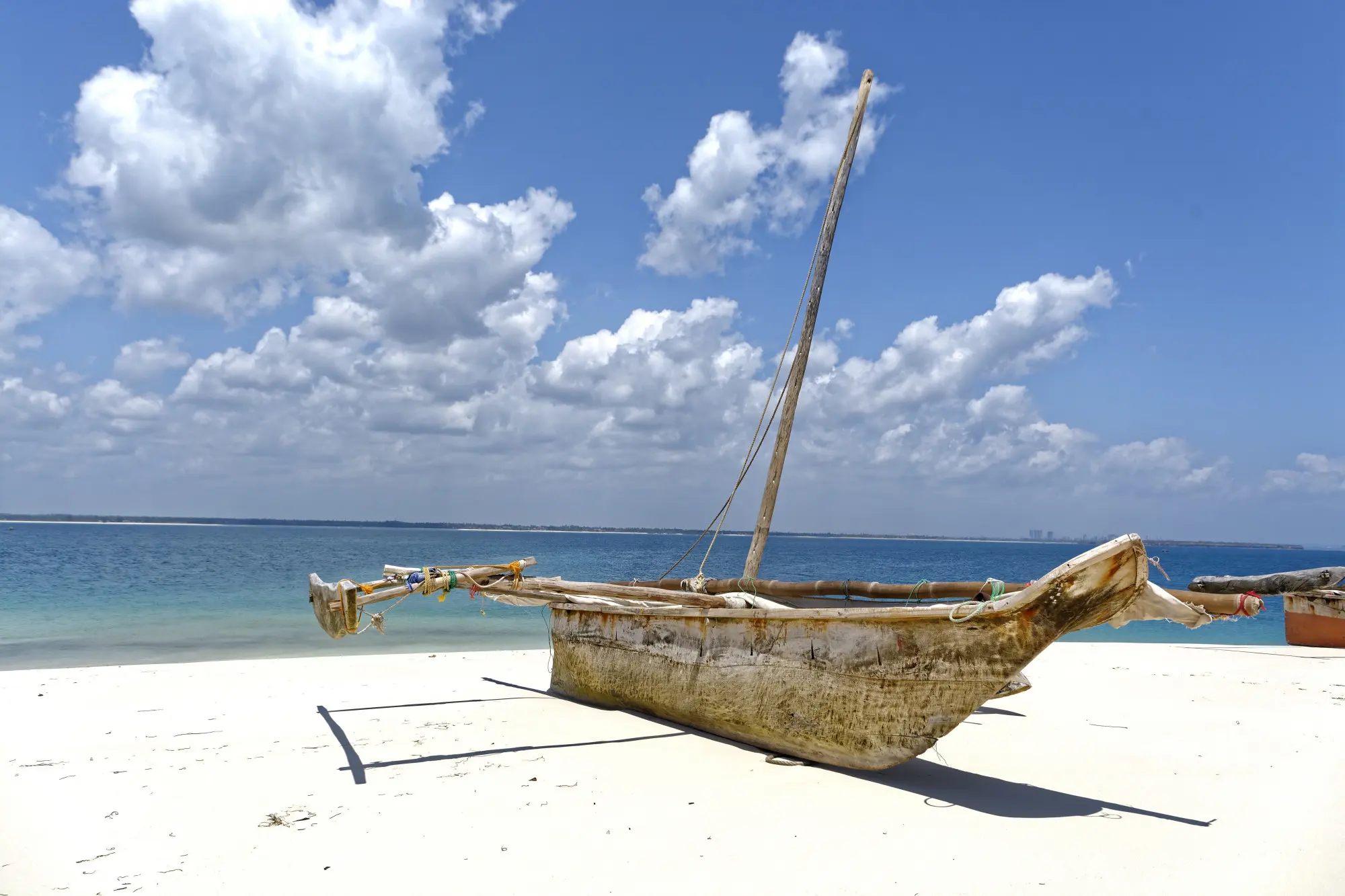
Read more ↓Northern circuit followed by Zanzibar's north coast or east coast. Connected by domestic flight, generally 1 to 2 hours depending on routing. The rhythm shift from bush to beach is part of what makes the journey work. The most popular Tanzania combination we build.
Read more ↓A private safari gives you and your travelling group one Land Cruiser and one experienced guide for the entire journey. No one else is in your vehicle. The pace of each game drive, the duration of each stop, and the daily schedule are entirely determined by you and your guide.
This is the foundation of every safari we build. The ability to stay at a predator sighting until it resolves, to return for a second morning at a location that produced results the previous day, or to ask the guide to detour based on radio information from other guides is only possible with a private vehicle. It is the single most important decision in planning a Tanzania safari.
"The difference between a private vehicle and a shared one is most obvious at a leopard sighting with cubs. In a shared vehicle, someone is always ready to move on. In a private vehicle, we stay. We watched a leopard and her two cubs for four hours one morning. No one left early."
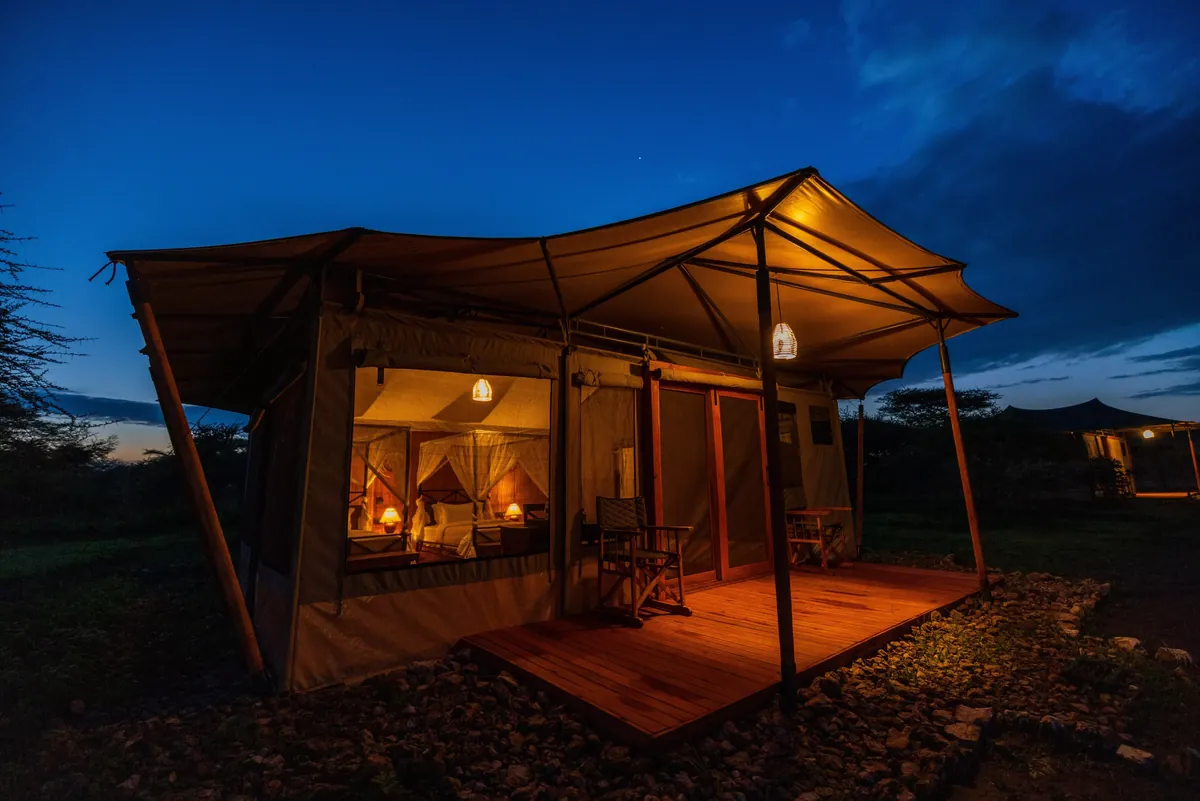
A luxury safari uses the same private vehicle and guide as any other safari we build. What changes is the quality of the camp, the positioning within each park, and the level of service that frames the game drive experience.
The best luxury camps in Tanzania are not just well-appointed rooms in beautiful settings. They are placed in locations that give you the wildlife advantage: the northern Serengeti camp that puts you at the Mara River before dawn, the Ngorongoro crater rim lodge that has views from every tent, the Tarangire camp positioned where the elephant herds move at dusk.
At luxury level we also introduce domestic fly-in transfers where they genuinely improve the journey, reducing long driving days and maximising time in the parks. We build luxury safaris at our own recommendation level rather than defaulting to the most expensive properties; the best-positioned mid-range camp sometimes outperforms a more expensive one in the wrong location.
Explore Luxury SafarisA honeymoon safari shares all the elements of a luxury safari and adds the dimension of intimacy and occasion. The vehicle is private by default, the camps are chosen for setting and privacy as much as wildlife access, and the Zanzibar extension creates a second chapter to the journey after the bush.
The most requested honeymoon combination is five to six nights on the northern circuit followed by five nights on Zanzibar's north coast. The contrast between dust and turquoise water, between early starts and slow mornings on a beach, is what makes the journey feel complete. We add small touches within the itinerary that mark it as a honeymoon without being excessive.
Tanzania is excellent for family safari with the right planning. The key decisions are park selection and pacing. Young children do best with shorter drives and parks where sightings are reliable and varied. Teenagers and older children can handle the full northern circuit without adjustment.
Tarangire is our most recommended first park for families. The elephant density is extraordinary, the landscape is visually dramatic, and the park is compact enough that drives produce results quickly. Ngorongoro Crater is the other anchor: guaranteed sightings in a contained setting that works for any age. Serengeti extends the journey for families who have more time and older children.
A migration safari is built around the wildebeest movement and requires two decisions that matter more than any other in Tanzania safari planning: the timing window and the camp position within the park.
The calving season in the southern Serengeti from January through March is the less publicised window, but the wildlife density around Ndutu during calving rivals anything in Africa. The Mara River crossings from July through October in the northern Serengeti are the most dramatic single wildlife event on the continent. Both require specific camps in specific locations to be done properly.
"A river crossing cannot be guaranteed. What we can guarantee is that guests are in the right place, with the right guide, for the window when crossings are most likely. We have had guests witness three crossings in four days. We have had guests watch the herds build on the bank for a day and then cross the next morning. The unpredictability is part of it."
A photographic safari uses the same parks and vehicle as any private safari. What changes is the orientation: every decision about timing, positioning, and stop duration is made around image quality rather than maximising the number of species seen.
The light in Tanzania is extraordinary in the first hour after dawn and the last hour before dusk. A photographic safari structures the day around these windows. Earlier departures, longer stays at critical sightings, and a guide who understands focal lengths and the difference between an adequate sighting and a photographically significant one.
We work with guests before departure to understand their equipment, their primary subjects, and their experience level. This informs how the guide briefs them each morning and what kind of positioning to prioritise throughout the drive.
A short safari is not a reduced safari. It is a focused one. With four or five nights available, the approach is to choose two parks that complement each other with a clear theme, rather than attempting the full northern circuit at a rushed pace that does each park a disservice.
Our standard short circuit combines Tarangire for elephants and dry-country wildlife with Ngorongoro Crater for guaranteed sightings in a dramatic setting. This combination works in any season, is accessible directly from Kilimanjaro airport without internal flights, and produces an exceptional wildlife experience without the driving time of the full northern circuit.
The safari and Zanzibar combination is the most popular journey we build. The transition from the northern circuit to the island takes under two hours by domestic flight and creates a natural second chapter: dust and early starts give way to turquoise water and slow mornings.
The standard combination is five to seven safari nights followed by four to five Zanzibar nights. We handle all connections including the domestic flight booking, the airport transfer on Zanzibar, and the hotel recommendations matched to the style of the safari portion. North coast (Nungwi or Kendwa) for guests who want reliable swimming and a social beach atmosphere. East coast (Jambiani or Paje) for guests who want something quieter and more remote.
Every style uses a private vehicle. The table below shows what differentiates each approach in terms of duration, accommodation, best season, and who it suits.
| Style | Typical Duration | Accommodation | Best Season | Best For |
|---|---|---|---|---|
| Private Classic | 6–9 nights | Mid-range to comfortable | Any | First-time and returning safari travellers wanting flexibility |
| Luxury | 7–10 nights | Premium and exclusive | Any, peak for best camps | Guests for whom camp quality and setting are priorities |
| Honeymoon | 10–14 nights | Premium + Zanzibar resort | Jun–Oct, Dec–Feb | Couples marking a special occasion with a beach extension |
| Family | 7–10 nights | Mid-range, family facilities | Jun–Oct, Jan–Mar | Mixed-age families, especially with children under 16 |
| Migration | 8–10 nights | Positioned northern/southern camps | Jan–Mar or Jul–Oct | Guests wanting the wildebeest spectacle as the primary event |
| Photographic | 8–12 nights | Any, positioned for light | Jun–Oct for dry conditions | Serious photographers, guests for whom images are the goal |
| Short | 4–5 nights | Mid-range | Any | Time-limited guests, those adding safari to Kilimanjaro |
| Safari + Zanzibar | 10–14 nights | Mid-range to premium | Jun–Oct, Dec–Feb | Guests wanting the full Tanzania experience in one journey |
Yes. Every safari we operate is private. Your group, your vehicle, your guide. We do not offer shared vehicle or group departure safaris. This is not a premium option; it is how we operate across all budget levels including mid-range journeys.
A private classic safari on the northern circuit is the most complete first visit. Tarangire, Ngorongoro, and the Serengeti cover the range of Tanzania's wildlife and landscapes in a logical sequence. The duration of six to eight nights gives enough time to settle into the rhythm without feeling rushed.
A migration safari is a standard private safari with the camp selection and timing optimised for the wildebeest movement. The parks, vehicle, and guide approach are the same. What changes is that we build the itinerary around being in the right position during the crossing or calving window, which requires specific camps booked well in advance.
Yes, most journeys combine elements. A honeymoon safari is also a luxury safari with a Zanzibar extension. A migration safari is also usually a private classic safari with specific camp positioning. A short safari can combine with a photographic focus. We build the itinerary around your goals rather than fitting you into a single category.
Every itinerary below represents a real journey in one of these styles. All are departure-ready and privately operated.
Classic
Migration
Safari + Beach
Tell us who is travelling, when, and what you want from the experience. We will recommend the right style, parks, and camps for your specific journey from our base in Moshi.