Plan Your Journey

info@amazinggallery.co.tz

WhatsApp: +255 748 691 331

Southern Tanzania

Ruaha
National Park

Tanzania's second largest park and one of its least visited. The Great Ruaha River supports some of the largest elephant concentrations in Africa. The lion prides here are large, the wild dogs are present, and the ancient baobab landscape stretches further than the eye can follow. Ruaha rewards the traveler who seeks it out.

20,226 km² National Park Large Lion Prides and Wild Dogs Fly-In from Dar es Salaam or Arusha
Park Area20,226 km²Tanzania's second largest national park
Elevation750–1,868 mVaried terrain, miombo to open plain
Lion PridesLargeSome of the largest known prides in Africa
Best SeasonMay–NovDry season. Peak game at the river: Jun–Oct.
From Dar1.5 hrsBy light aircraft to Msembe or Jongomero airstrip
Southern Tanzania

What Ruaha Actually Feels Like

Ruaha does not feel like the northern circuit. The landscape is different , more ancient, more massive, more geological. The baobabs here dwarf those in Tarangire. The Great Ruaha River in the dry season becomes a sand river with narrow water channels, and everything in the park comes to it. The lion prides that develop in this kind of concentrated prey environment grow large and well-studied. There are no guarantees in the wild, but Ruaha is consistently exceptional for big cats, elephants, and the quality of silence.

"The lion prides here grow large because the land demands it."

Great Ruaha River, Dry Season Afternoon
The river in July is almost entirely sandbank. A narrow channel of water runs through the middle, and on the banks there are two lion cubs that have climbed a baobab tree while their mother sleeps below. The elephant herd that has been at the water since 3pm is beginning to move back into the miombo. Twelve elephants. Then the sound of more coming through the trees behind you. The guide counts quietly. Thirty-four. Ruaha in the dry season is the animals, the river, and the ancient landscape they all move through together.

The park is bisected by the Great Ruaha River, and the dry season concentrations along it are the defining Ruaha experience. But the park is large enough that the game extends well beyond the river corridor. Rock kopjes provide elevated habitat for lions and leopards. The miombo woodland supports a completely different wildlife community from anything on the northern circuit. For serious wildlife travelers, Ruaha consistently produces the kind of unscripted, multi-layered game viewing that larger park ecosystems provide.

Five Zones

Understanding the Ruaha Ecosystem

Five distinct zones define what a Ruaha game drive looks like. The river is the anchor. Everything else radiates from it across a landscape that changes dramatically with altitude and soil.

June – October (dry season)
Great Ruaha River
The central feature of the park. In the dry season the river drops to a series of sand channels and pools where enormous numbers of elephant, buffalo, zebra, and predators concentrate. The dry river bed with its exposed sandstone formations creates a landscape unlike anywhere else in Tanzania.
Plan Your Ruaha Safari →
Year-Round
Baobab Forest
Ruaha holds some of the largest baobab trees in Tanzania. Older and more massive than Tarangire's baobabs, and interspersed with granite rock kopjes that break the landscape into dramatic compositions. The combination of ancient baobabs, rock outcrops, and river valley creates the defining Ruaha visual.
Plan Your Ruaha Safari →
Year-Round
Rock Kopjes
Granite outcrops rise from the miombo woodland throughout the park. Lion prides use the kopjes as elevated resting and observation points. Klipspringer live in the rocky faces. The Ruaha kopjes are geologically similar to the Serengeti kopjes but larger and less visited, meaning a lion pride on a Ruaha kopje is often a private sighting.
Plan Your Ruaha Safari →
Denning Season Jun–Sep
Wild Dog Territory
Ruaha holds one of the largest and healthiest wild dog (African painted wolf) populations in East Africa. The packs use the miombo woodland and open scrub for denning and hunting. During denning season (June to September) packs become predictable and sightings are consistent. A Ruaha wild dog hunt is one of the most intense predator experiences available in Tanzania.
Plan Your Ruaha Safari →
Year-Round
Remote Wilderness
The southern and eastern sections of Ruaha are barely visited even in peak season. The landscape opens into a vast elevated plain with distant hill ranges visible in every direction. No other vehicles. Wildlife that has encountered very few humans. This is the Ruaha that rewards travelers who stay long enough to seek it out.
Plan Your Ruaha Safari →
Timing Your Visit

Best Time to Visit Ruaha

The Great Ruaha River is the key seasonal indicator. As it drops through the dry season, wildlife concentrates along its banks in ever-larger numbers. June through October is the peak.

Jan
Good
Feb
Good
Mar
Good
Apr
Rains
May
Drying
Jun
Good
Jul
Peak Dry
Aug
Peak Dry
Sep
Peak Dry
Oct
Peak Dry
Nov
Good
Dec
Good
PeakBest conditions for this experience
GoodStrong experience, fewer visitors
FairPossible but variable conditions
Peak dry season
July through October
Maximum wildlife concentration at the river. The sandbanks appear and create extraordinary landscape photography. Lion prides active around water. Elephant herds in the hundreds at the main river channels.
Early dry season
May and June
The river begins dropping and game concentrates early. Fewer vehicles than later in the season. Very good conditions overall and a slightly greener landscape than peak season. Our preferred window for photographers who want colour and game density together.
Green season
November through March
The river rises and the landscape transforms. Migratory bird diversity peaks. Fewer game drives produce large mammal sightings per hour, but the atmosphere is extraordinary. Some camps close in April. We advise against April travel.
On Safari

What a Day in Ruaha Feels Like

Ruaha game drives have a different rhythm from the northern parks. The distances are greater, the vehicle density is minimal, and the guide reads the landscape differently when they know they might not see another vehicle all morning.

05:30 – 06:00
Dawn Departure
The Ruaha morning begins cold at altitude. The vehicle leaves camp in the dark. The guide has planned the direction from the previous evening's observations. The destination is the river, the kopje, or the woodland, depending on what was heard overnight.
06:00 – 09:00
River Run at Dawn
The Great Ruaha River at first light. Elephant herds that spent the night at the water. Lion tracks in the sandbank. Crocodile on the exposed sand. In the dry season this is one of the most productive early morning game viewing areas in southern Tanzania.
09:00 – 11:30
Big Cat Country
Moving away from the river into the baobab and kopje zones. The lion prides here are large , groups of 10 to 20 individuals have been documented. Rock kopjes provide elevated positions for sightings. The guide works systematically through territories that are known from years of operation.
11:30 – 15:00
Camp Return and Rest
The midday heat in Ruaha is significant. Back to camp for a proper meal and several hours of rest. The camp itself, often positioned on the river bank, is part of the Ruaha experience: wildlife passes through the camp area and elephant often visit the river within view.
15:00 – 17:30
Wild Dog Afternoon
Wild dog packs become active in the late afternoon. Ruaha holds one of the largest wild dog populations in East Africa. Afternoon drives are structured around tracking the pack's known territories. A wild dog hunt is one of the most intense wildlife experiences anywhere.
17:30 – Sunset
Evening at the River
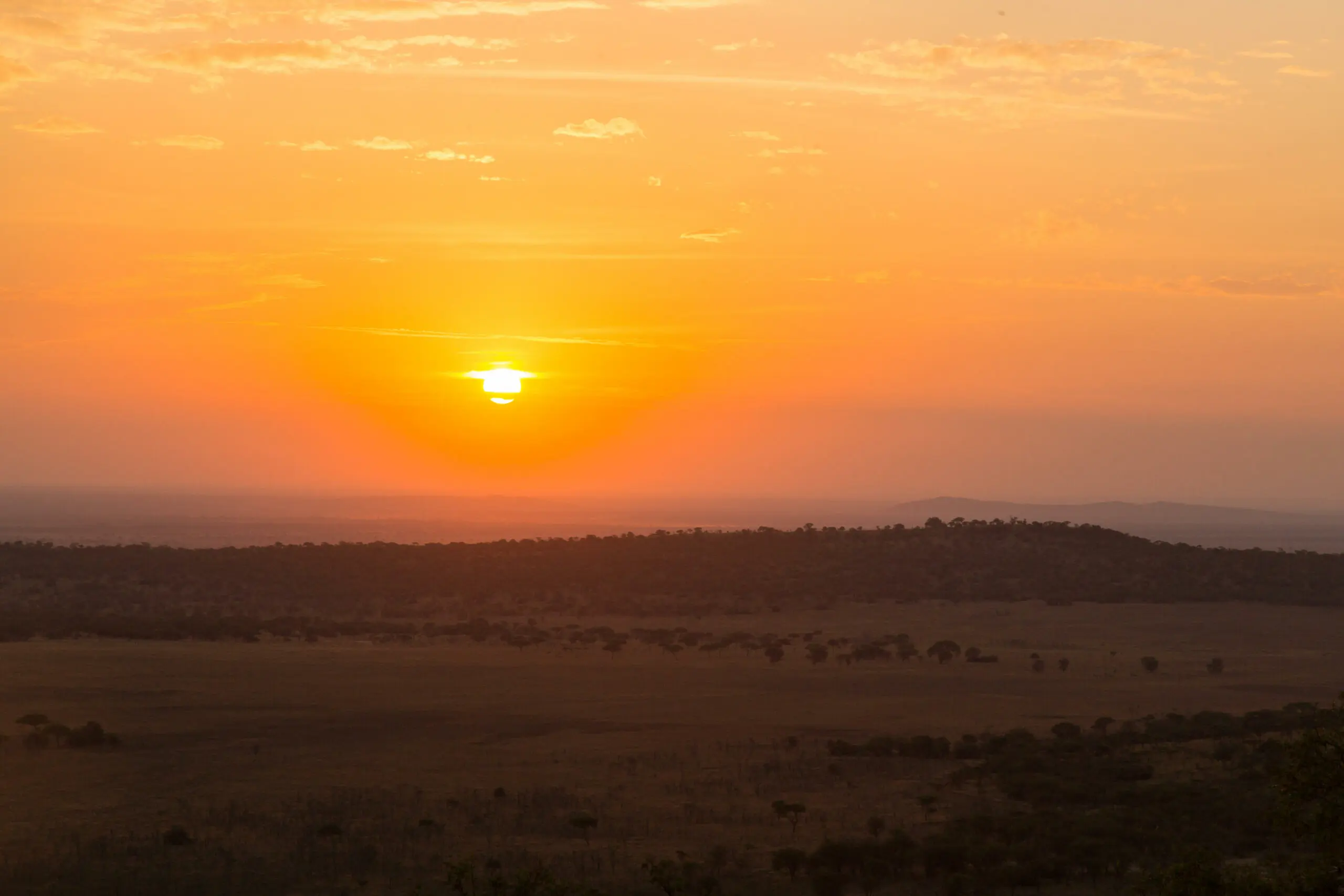
The late afternoon light on the Great Ruaha River is extraordinary. The colours of the sandstone, the baobab bark, and the golden light all converge at the same hour. Sundowner on the riverbank. Back to camp after dark. The sounds of the Ruaha night.
Accommodation Planning

Where to Stay in Ruaha

Ruaha camps are fly-in properties, positioned along the Great Ruaha River or in the park interior. There are fewer than a dozen camps in the entire park.

Ruaha River Camps
River-Based Camps
The core Ruaha experience. Camps positioned directly on the Great Ruaha River with immediate access to the best dry-season game viewing. Very few camps occupy this position, and the best ones have private frontage.
Best for: First visits. The full Ruaha experience. Wildlife photography.
Mwagusi River
Mwagusi Sand River Area
The Mwagusi is a seasonal tributary that produces exceptional game viewing in the dry season. Camps here have access to different wildlife areas from the main river and tend to see fewer vehicles at any given sighting.
Best for: Those wanting a different Ruaha perspective. More exclusive feel.
Southern Ruaha
Remote Interior Camps
A very small number of camps operate in the southern and eastern sections of the park. Rarely visited, different vegetation, and wild dog territory that most Ruaha visitors never reach.
Best for: Repeat visitors. Wild dog specialists. Truly remote safari seekers.

Ruaha camp availability is limited year-round. We book accommodation before finalising any other logistics. Talk to us about your Ruaha dates.

Trip Planning

How Long to Stay in Ruaha

The distances within the park and the nature of the game viewing reward time. Three nights is the genuine minimum.

3 nights
Minimum
River and kopje essentials
Three nights gives three morning drives and two full afternoon drives. Enough for the river wildlife, a kopje lion attempt, and one wild dog afternoon. The minimum to understand what Ruaha is.
Best for: Adding a Ruaha extension to a northern circuit. First experience of the south.
5+ nights
Extended
For those who want all of it
Five or more nights for photographers, birders, or those for whom Ruaha is the primary destination. The park has enough wildlife and enough variation to fill a week without repetition.
Best for: Photographers. Birders. Wildlife specialists. Those who have done the north.
Expert Guidance

Common Ruaha Planning Mistakes

Ruaha is one of Tanzania's least-known parks to international visitors. The same misunderstandings appear consistently.

Comparison
Comparing Ruaha to the northern circuit unfavourably
Ruaha game drives do not produce the same per-hour sighting rates as the central Serengeti in peak season. The landscape is bigger, the drives are longer, and the wildlife is less concentrated. But the nature of the sightings , a lion pride of 18 on a kopje with no other vehicles , is incomparable. Travelers who arrive expecting Serengeti dynamics will misread what Ruaha offers.
Season
Visiting in April
April is the heavy rain peak. Tracks flood, some airstrips close, and camp access becomes difficult. Several Ruaha camps close for maintenance in April. May is transitional and can be good. The clear window is May through November, with July through October being peak.
Duration
Booking only two nights
Two nights means two morning drives and one full afternoon drive. Ruaha requires more time to reveal itself. The wild dog packs need multiple attempts to locate. The elephant concentrations build as the dry season progresses. Three nights is the minimum.
Logistics
Not planning the fly-in route in advance
Ruaha is a fly-in destination from Dar es Salaam (1.5 hours) or from Iringa by road (3.5 hours). The fly-in is the standard approach for most visitors and needs to be booked in advance as airstrip slots at the main Msembe strip are limited in peak season.
Responsible Travel

Travelling Responsibly in Ruaha

Low-impact game driving. Ruaha has fewer than a dozen camps in a park of 20,000 square kilometres. One of the most significant ways to protect this remains limiting vehicle density at sightings. The guide culture in Ruaha is generally excellent in this regard: camps that value the experience respect approach distances and departure times without being asked.

Community and conservation. The TANAPA management of Ruaha works alongside buffer zone communities who live adjacent to the park boundary. The relationship between park income, community benefit, and wildlife protection is active and ongoing. We support operators who invest in community relationships rather than treating the park as an isolated tourism asset.
Plan Your Journey

Start Planning Your Ruaha Safari

Tell us your travel dates and what you want to combine with Ruaha. We handle fly-in logistics from Dar es Salaam or Arusha and build the full itinerary.

Plan Your Ruaha Safari Contact Us
WhatsApp Us
WhatsApp Us